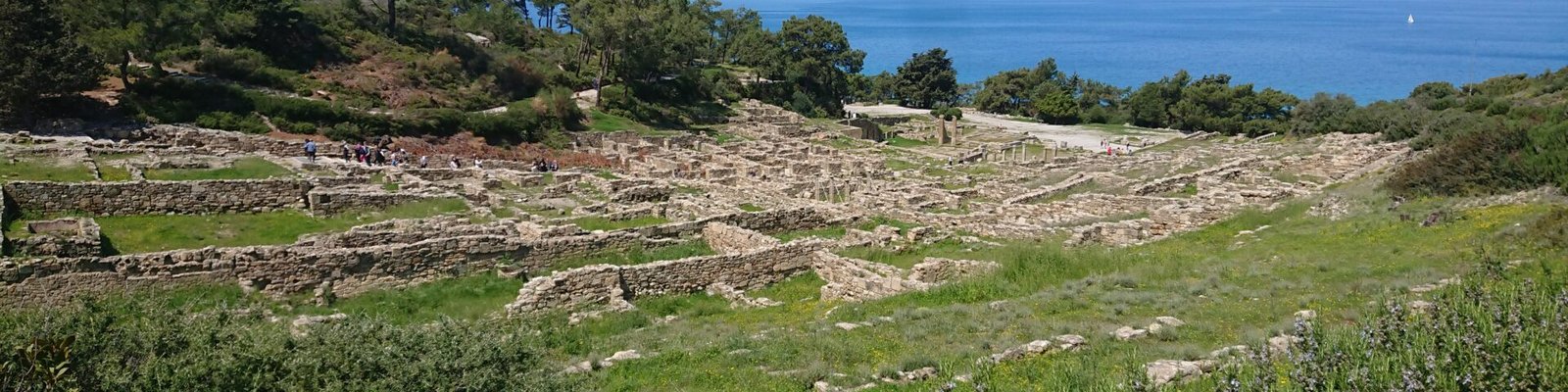
Kamiros was one of the three city-states that shared the Greek island of Rhodes in the Bronze Age, along with Ialysos and Lindos. The three cities survived beyond the Bronze Age, although their importance was eclipsed in the Classical period when the three states joined together and established the city of Rhodes at the northeast tip of the island, which they made their capital.
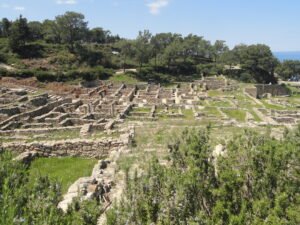
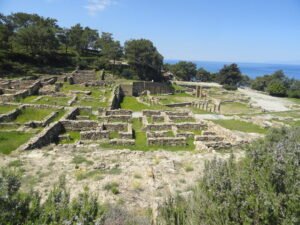
The ruins that can be found at the site now are mostly from the Hellenistic and Roman periods. Unlike the sites of the other three ancient cities of Rhodes, Kamiros is no longer inhabited, so it was possible for the city to be fully excavated and made a dedicated archaeological site which visitors can see while strolling down the same ancient streets its ancient inhabitants used.
A visit begins at the northwest corner of the site, where one can see the ruins of the various structures associated with the city’s agora, or market area, which included a small temple in the Doric style.
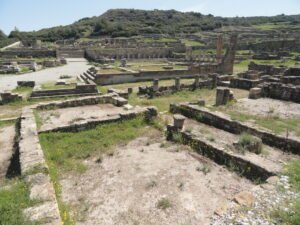
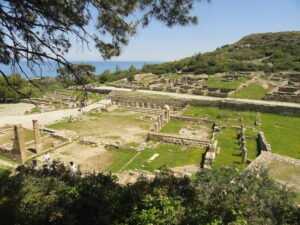
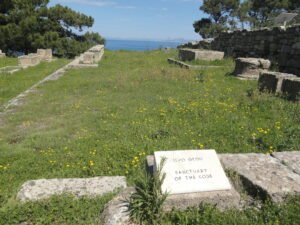
Next to the agora are a few other structures, including a bath complex (below left) and a sanctuary dedicated to the gods (below right).
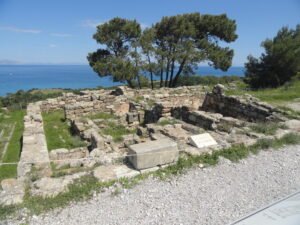
From there, the visitor can stroll along the city’s main avenue southwards, up the hill towards the acropolis.
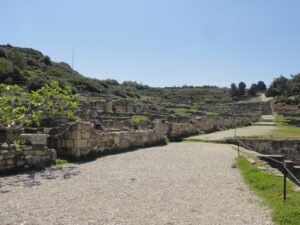
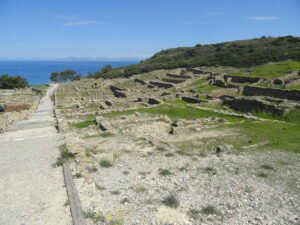
There are lots of interesting structures to see on both sides of the avenue, including many which can be entered.
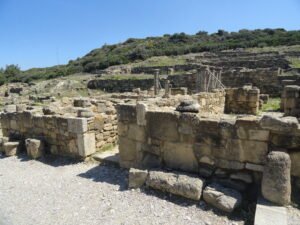
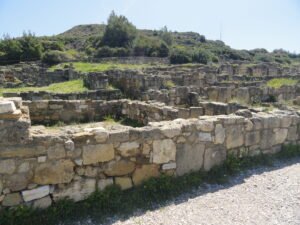
Another bath complex was located in the middle of the city on the south side of the avenue and is the most eye-catching structure in this area of the site.
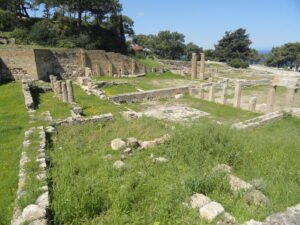
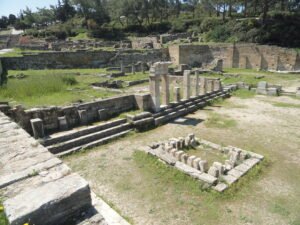
The high ground at the southern end of the site was used as the city’s acropolis. The main structure there was a sanctuary dedicated to Athena (below left). The sanctuary was originally established in the 9th century BCE, but the ruins visible today are from the Hellenistic period. This includes the ruins of the temple which stood behind an unusually massive stoa more than 200 meters long (below right).
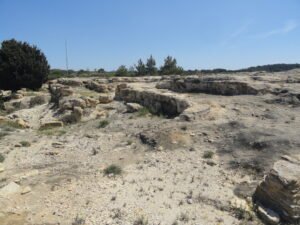
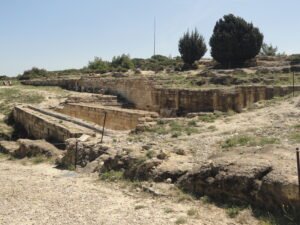
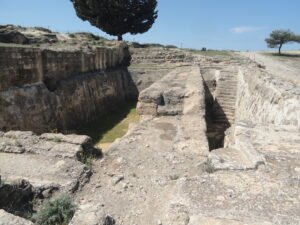
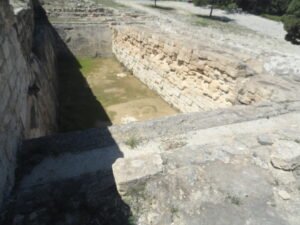
In front of the foundations of the stoa is an excavated cistern built in the 6th century BCE–one of the oldest structures visible at the site today.
There is another visitor’s path in the high ground to the east of the site that can be used as an alternative to the ancient avenue in crossing to the other end of the site. This path offers some nice views of the whole site, so it is recommended that a visitor take this path one way between north and south and the ancient avenue the other way.
Tips for the Visitor
The site is a 4-km drive or hike from the village of Kalavarda, which is accessible by bus from the main town of Rhodes. There are also organized group tours which visit the site. Before going on your own, check online for up-to-date opening times and admission fees.
Location Map