 Málaga is the second-largest city in the southern Spanish region of Andalusia. A port city, it is also part of Spain’s Costa del Sol. And like Córdoba (130 km to the north) it has a long history going back to ancient times.
The city began as the Phoenician colony of Malake in the 8th century BCE. A couple centuries later, dominion over Malake passed to another, more powerful city established by the Phoenicians — Carthage. When the Romans conquered Carthage in the 3rd century BCE, they also took over its territory, including Malake, which they called Malaca.
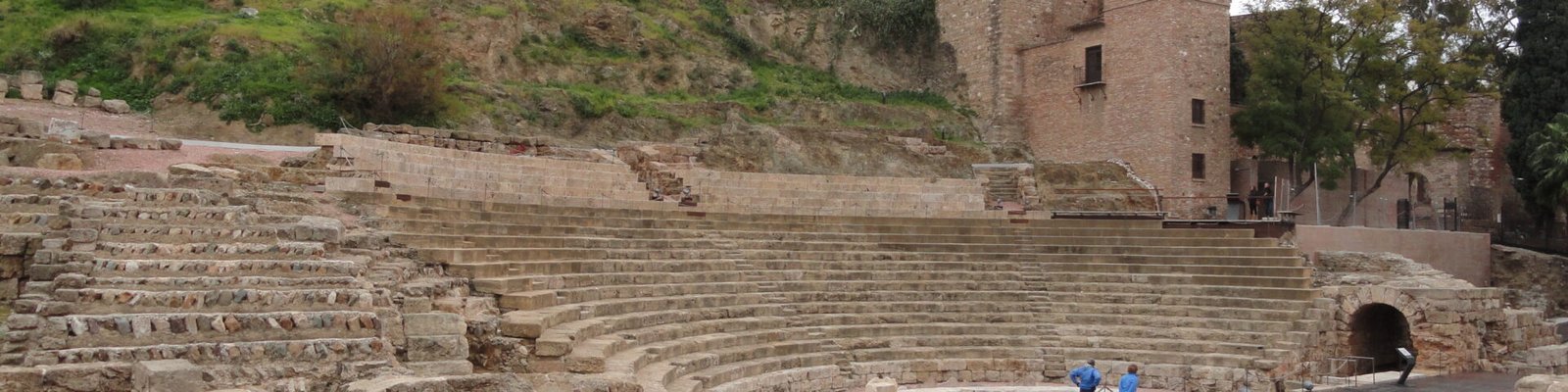
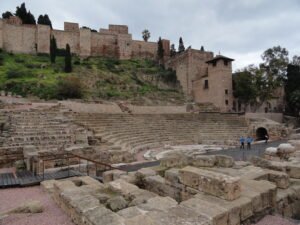
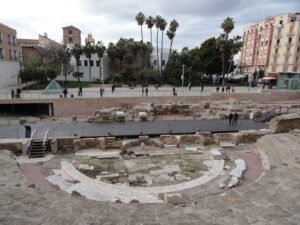
For a glimpse of Roman Malaca, you can find the ruins of its theater in the Plaza del Zurreo. It dates to the 1st century BCE.
Tips for the Visitor
The ruins of the Roman theater are now part of the city’s fabric and thus can be visited any time without any admission ticket.
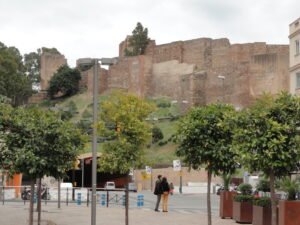
Like in Córdoba, Málaga’s lone ancient building is just one of many sites of interest to visitors. For grand monuments, don’t miss the Alcazaba, the Moorish fortress just behind the theater, or the city’s impressive cathedral, just a couple blocks to the southwest. Art enthusiasts will also enjoy a visit to any of the city’s many art museums, in particular the Málaga Museum and the Picasso Museum, as well as the house where Picasso was born–all of which are within a few hundred meters of the Roman theater.
Location Map