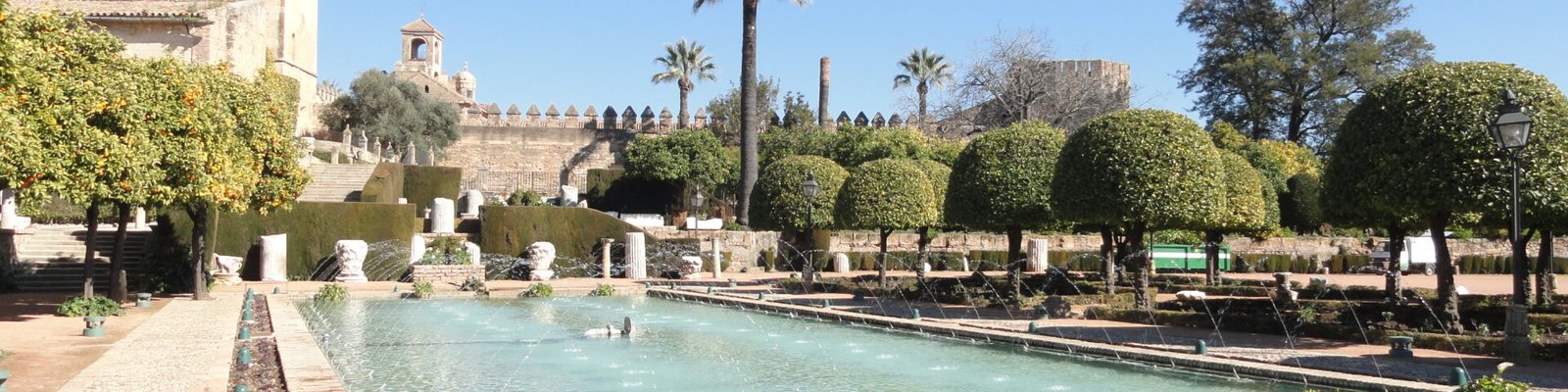
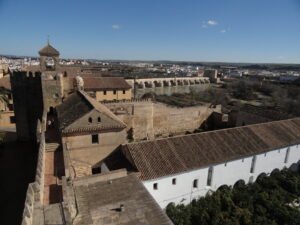
 The city of Córdoba, located near the center of the southern Spanish region of Andalusia, has had a truly remarkable history. A thousand years ago it was the largest city in the world. And over the centuries it has been a central part of many cultural legacies. At its peak, it was the capital of Muslim Spain as well as an important center of medieval Jewish scholarship; it was during that time that saw the construction of the massive Great Mosque of Cordoba, one of the wonders of the Medieval world.
Going back much further, the city was the site of settlements going back to prehistoric times. There was a settlement there that the Romans captured when they took over the area in 206 BCE, and soon afterwards they established their own city of Corduba there, which about a century later was given the official name of Colonia Patricia, although use of the name Corduba continued. Roman Corduba was the hometown of the Stoic philosopher Seneca and the poet Lucan.
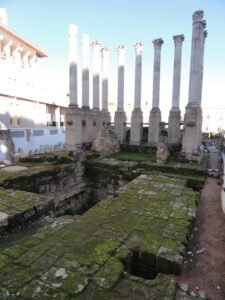
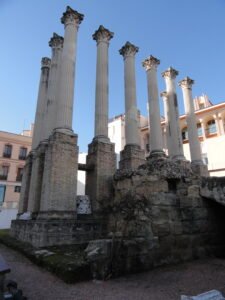
Although there are many impressive sights of historical significance to see there today, only one building of Roman Corduba is still standing out in the open air. It is now called the Roman Temple of Córdoba, a testament to the uncertainty of to which god or gods it was dedicated. It was built in the 1st century CE.
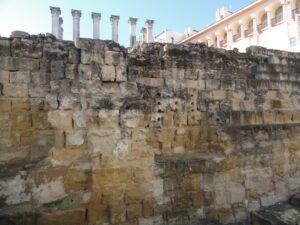
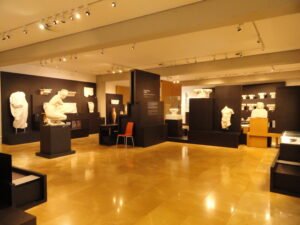
To make up for the very limited ancient standing architecture, there is a archaeological museum 300 meters southwest of the temple. Within it are the ruins of the city’s ancient theater, as well as numerous finds from that ancient era.
Tips for the Visitor
The most attractive historical legacies on display in Córdoba today are of course not those within our scope of ancient antiquity but rather those from the golden age of the city’s greatness, including the Great Mosque (now the cathedral) and the old Jewish quarter with its 14th-century synagogue. But while you are in town, be sure to check out the ancient Roman temple as well.
Location Map